First-time visitors
Anchor each day around one major attraction or area in Steiermark, leave evenings flexible, and skip the second museum. Use one orientation tour early to get your bearings.
See suggested experiences
Preview travel guide
A practical overview of Steiermark: where to start, how the destination is laid out, when to visit, and how to plan a first trip.
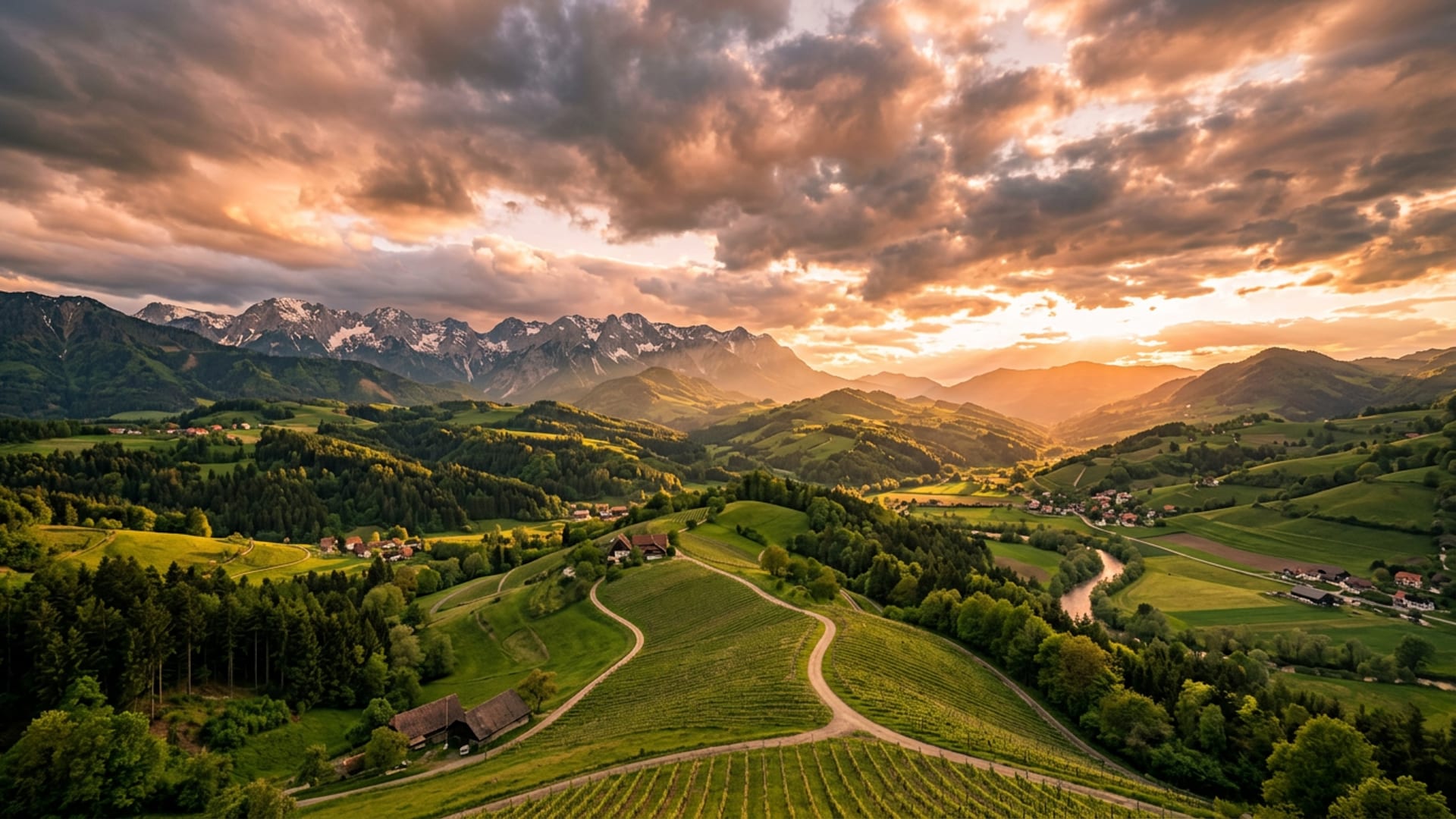
Steiermark, or Styria, is Austria’s second-largest state situated in the southeast of the country, bordering Slovenia to the south and Burgenland to the east. The region features a diverse landscape from Alpine mountains in the north to rolling vineyards in the south, with Graz as its main urban and transport hub.
Steiermark covers a broad area with varied topography and land use. The northern and northwestern parts are Alpine, including the Dachstein Glacier region, offering high-altitude terrain. Central Steiermark is heavily forested, earning the nickname “the green heart of Austria.” Southern and southeastern areas feature hilly wine country along the Südsteirische Weinstraße, a notable viticultural route bordering Slovenia. Graz, the state capital, lies in the south-central part and acts as the primary urban center and transport hub, with Graz Airport nearby serving regional and some international flights.
In Graz, the UNESCO-listed Old Town (Altstadt) along the Mur River is the historic core with medieval and baroque architecture. Schlossberg, a hill rising above the city center, is known for its clock tower and panoramic views. Beyond Graz, Schladming in Upper Styria is a well-known mountain town for skiing within the Schladming-Dachstein region. The Lipizzaner stud at Piber, west of Graz, is notable for breeding horses for the Spanish Riding School. The South Styrian Wine Road (Südsteirische Weinstraße) is lined with vineyards and traditional wine taverns, representing the region’s viticultural character.
Steiermark’s geography ranges from Alpine peaks in the north to forested central areas and rolling vineyards in the south. The climate is largely continental, with cold winters—Graz averages around 0 °C in January—and warm summers, with July temperatures typically around 20–21 °C. Late spring (May–June) and early autumn (September–October) are known for milder temperatures, suitable for outdoor activities. Forests cover approximately 60% of the region, contributing to its extensive green landscapes and natural appeal.
Steiermark works best as a two- or three-town trip, threading by short drives or local transport between bases. Pick the bases by character — historic centre, coastal town, mountain village — and let the geography set the pace.
Starting points for shaping the trip around the style that fits — not a fixed itinerary.
Anchor each day around one major attraction or area in Steiermark, leave evenings flexible, and skip the second museum. Use one orientation tour early to get your bearings.
See suggested experiencesA 2–3 day visit in Steiermark works best when you commit to one base and one or two anchors per day, rather than moving between towns or trying to "see everything".
See suggested experiencesSeven days or more lets you pair a city stay with a regional or coastal add-on. Pick a contrast — urban + nature, or central + countryside — and use the longer window for slower mornings.
See suggested experiencesChoose attractions with clear timings and skip-the-line tickets, keep at least one outdoor or interactive stop in each day, and protect downtime — pacing matters more with kids.
See suggested experiencesBuild the trip around the landscape: trails, viewpoints, day-from-base outings, and any signature activity. Book weather-sensitive plans early and keep a buffer day if you can.
See suggested experiencesPick one or two stretches of coast rather than chasing the perfect beach. Local boats and ferries set the pace; flexible dates beat fixed itineraries when weather is in play.
See suggested experiencesFour distinct seasons each shape a different trip. Pick the season for what you want to do, not the other way around.
Mild, lighter crowds, gardens at their best. Good time to visit Steiermark if you want walking weather without summer prices.
Peak season — best weather but the busiest, most-expensive window. Book major sites and trains weeks ahead.
Often the quiet sweet spot: autumn colour, harvest food, lower hotel rates. Pack layers — late autumn turns cool fast.
Quietest, cheapest, sometimes coldest. Good for museum-led city visits, Christmas markets, or skiing where applicable.
Weather varies by region and altitude — check forecasts close to travel rather than assuming the season.
Direct answers to the questions most travellers actually ask before they book.
Named districts, beaches, viewpoints and points of interest. Hover a pin to see its description.
Other travel resources that complement this preview guide.
Are you a hotel, tour operator, local guide, contributor, or potential partner? We're expanding the Steiermark guide and would like to hear from you. Send us a note and we'll reply personally.